What the label numbers do and do not tell you
SPF describes protection mainly against UVB, measured in a laboratory under the ISO 24444 method, which applies sunscreen at 2 mg per square centimetre of skin. Most people apply less than that in real life, which is why the amount you put on matters as much as the number on the tube.
UVA protection is labelled differently by region. In the EU, Commission Recommendation 2006/647/EC asks that UVA protection be at least one third of the labelled SPF, shown by the circled "UVA" logo. In the UK you may also see a star rating, and in the United States "broad spectrum" indicates the product passed the FDA's test. Water resistance claims are tested for set periods — commonly 40 or 80 minutes in US labelling — and do not mean waterproof.
We do not test products ourselves and do not rank protection levels. Instead, we compare how each format behaves in your hands, on a deck or on a beach towel. For guidance on choosing an SPF, organisations such as the NHS, Cancer Research UK and the American Academy of Dermatology publish clear advice; the AAD, for example, recommends broad-spectrum SPF 30 or higher.
Lotions and creams: the measurable default
Why they earn space
- Easy to see and measure how much you squeeze out
- Spreads over arms, legs and back with fewer gaps
- Wide choice of water-resistant options for swimming
- Bulky for carry-on if you need a full-size tube
- Caps can loosen in heat; bag them separately
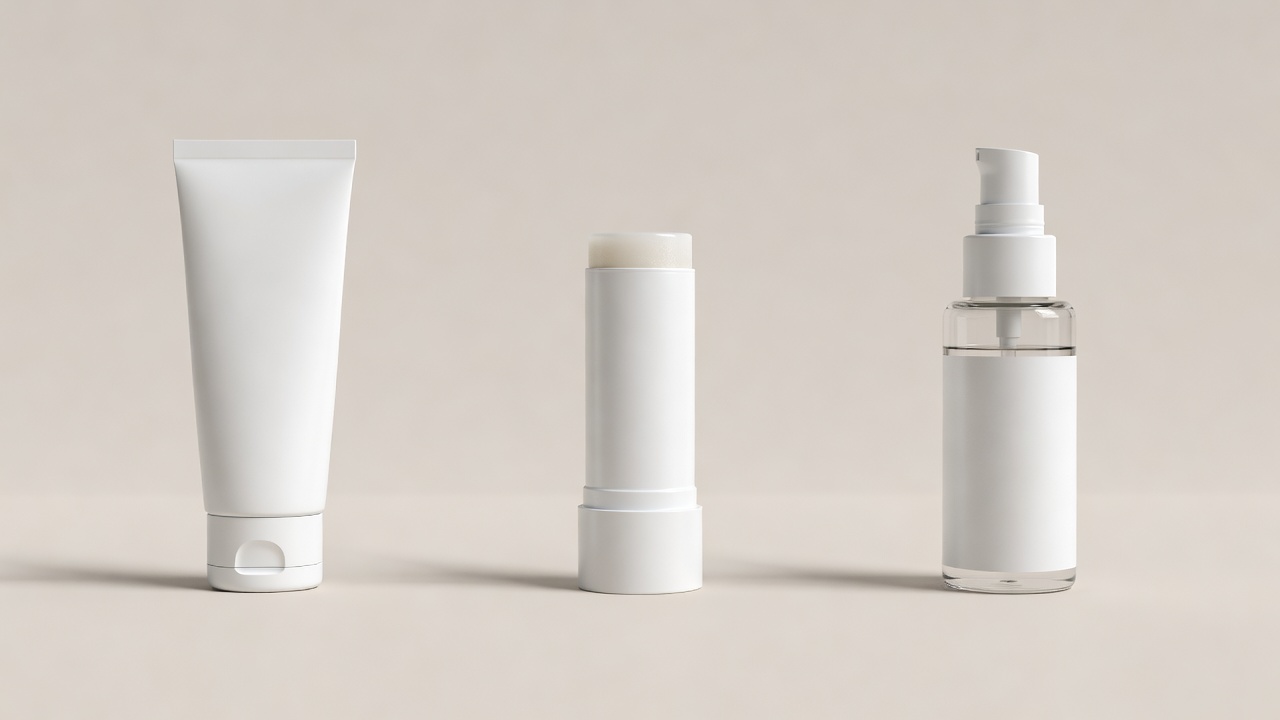
For a beach week, a lotion is usually the core sunscreen. The NHS suggests around two teaspoons to cover the head, arms and neck, and around two tablespoons for the whole body when wearing a swimming costume. At that rate, a 100 ml tube goes quickly for one adult on long beach days — plan quantity before you plan containers.
Sticks: precise, tidy, limited
A twist-up stick is the item many sailors and hikers keep in a jacket pocket. It does not spill, it is quick for the nose, ears, cheekbones and the backs of hands, and solid sticks are often easier to manage at airport security, though rules vary by country.
The trade-off is coverage. Getting a stick's labelled amount onto large areas takes many passes, so think of it as a top-up partner to a lotion rather than a replacement. Follow the product's own directions on how many passes to use. Sticks may soften in very hot cars or cockpits; keep the cap on and the stick out of direct sun.
Sprays and mists: fast, but hard to judge
Sprays are popular for children and for hard-to-reach backs, but outdoors they have two weaknesses. Wind on a boat or an exposed beach carries the mist away, and it is difficult to tell how much reached the skin. Many labels advise spraying until skin glistens and then rubbing in, and spraying into the hands rather than directly onto the face. Pressurised aerosols are restricted in some luggage and should not be left in hot vehicles.
Pump sprays without propellant avoid some of those issues, but the coverage question remains. If you prefer a spray, pair it with a quick hand-rub check over each area.
Face fluids and tinted formulas
Lightweight face fluids are pleasant under a hat and over moisturiser, and they come in small sizes that suit carry-on bags. If you already use one daily, packing it saves a container. On swimming days, check whether it is labelled water resistant; many face fluids are not.
Sunscreen is one layer, not the whole plan
The WHO's UV Index is a useful daily check: at 3 and above, shade, clothing, a wide-brimmed hat and sunglasses are recommended alongside sunscreen. UV tends to peak around the middle of the day, and water, sand and snow reflect it. A UV-protective rash vest or long-sleeved sun shirt can reduce how much sunscreen you need to carry.
Some destinations regulate ingredients. Hawaii's Act 104 banned the sale of sunscreens containing oxybenzone and octinoxate from 1 January 2021, and Palau introduced restrictions in 2020. Check local rules before you travel; we do not label any product "reef safe", as that term is not standardised.